
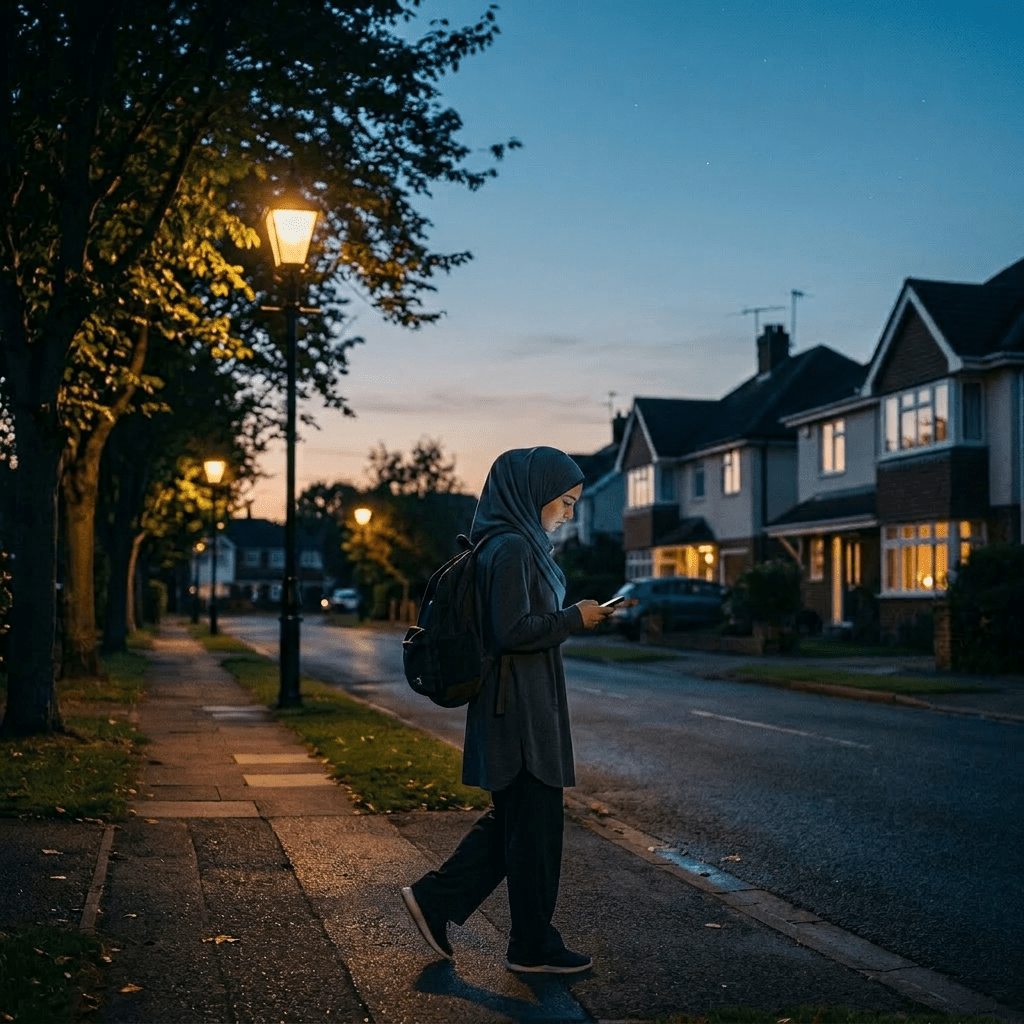
When Sana was younger, her house was always bustling. In the background, there was always the TV playing, the aroma of herbs in the air, and family on the phone. Her mom cooked in the kitchen with oil sizzling, and her dad watched cricket on the TV. Even on days when nothing was happening, her house was never truly quiet. Her parents spoke to her in Urdu; even if Sana did not understand everything, she understood enough. When her mom called her name out in such a soft tone, it made her feel safe.
“Sana, come here for a second,” her mom would call gently.
“Coming,” Sana would reply, her voice light.
She even wore her hijab proudly every day. It was just part of her everyday routine, like washing her face or picking out a cute outfit. Her mom would often help her fix it in the mornings, adjusting it slightly before she left for school.
“Wait, it’s a little loose here,” her mom would say, fixing the edge carefully.
Her dad would remind her to study hard and not waste time.
“Focus on your work,” he would say. “Don’t get distracted.”
“I won’t,” Sana would answer, even if she was not fully listening.
They ate dinner together almost every night, sitting close, talking over each other, sometimes laughing, sometimes arguing, but always together. Back then, Sana never thought about who she was. She did not question anything. She did not compare her life to anyone else’s. Everything felt natural to her.
Things took a drastic turn for her when she first transferred to a public American middle school. When she first transferred, her heart was pounding with anxiety. Fortunately for her, the first few days passed quickly with people sharing a quick hello now and then. During lunch, Sana would sit alone, eating quietly. She pondered her future life in this new school. She hated new things.
New teachers and new friends all felt unpredictable, and she did not like the feeling of not knowing what would come next. Thinking about that made her shiver with nervousness. She decided to try her best and stay within her comfort zone. As she was deep in thought, the lunch bell rang, and it was already time to go back to class. She hurried to shut her lunchbox and stumbled to class.
After school was over and she had headed home, her mother was waiting for her by the door expectantly.
“How was school?” her mom asked.
Sana shrugged. “It was alright.”
Her mother smiled and invited her to come eat lunch before she started her homework.
“Come, I made food. Eat first,” she said.
“I’m not that hungry,” Sana replied.
Sana frowned and turned to head to her room. She threw her bag across her room and chucked herself onto the comfort of her bed. She reflected on the days that passed. It wasn’t like anything bothered her; however, everything felt unreal.
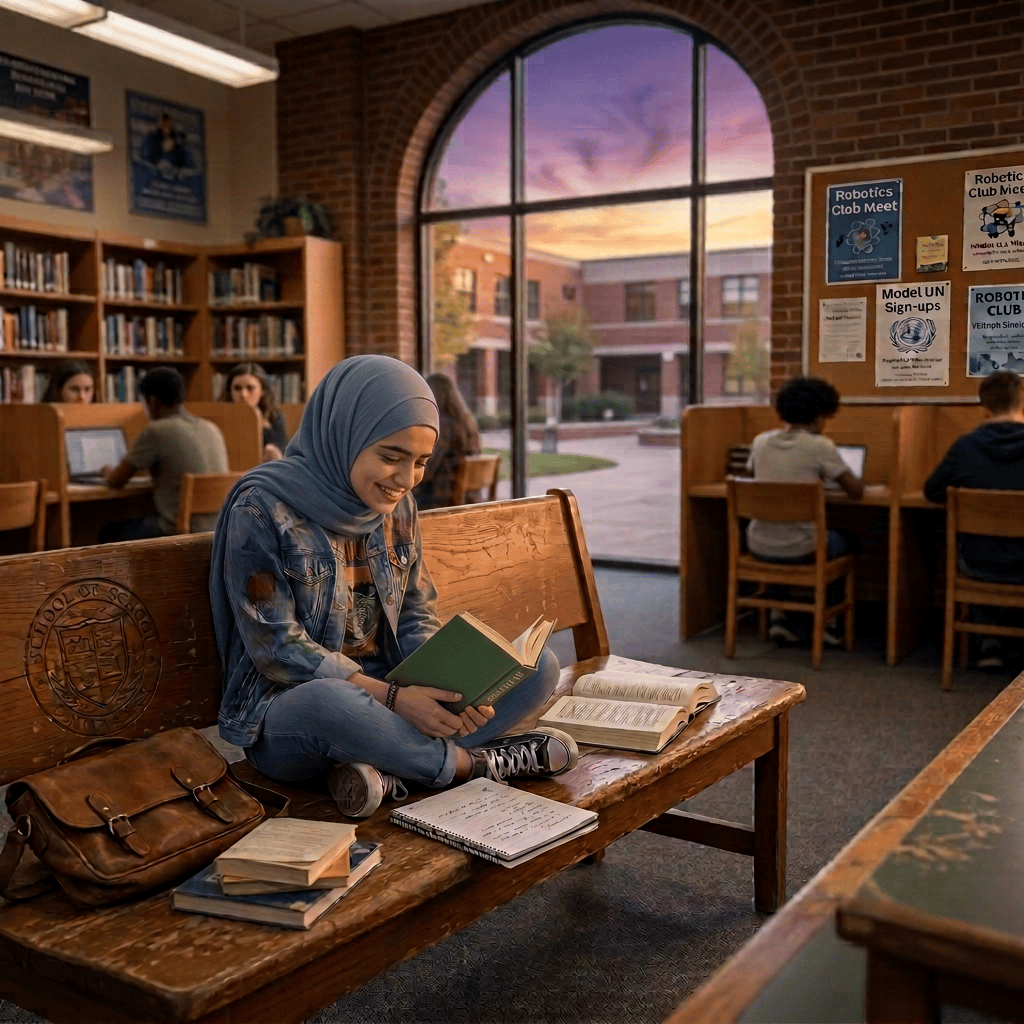
The days following had a similar pattern of people exchanging small greetings, Sana eating lunch alone, and being left out. One day, a girl from her math class, Clara, waved to her again, and this time Sana waved back without hesitating. It was a small moment, but it stuck with her. Later that week, the same girl walked over during lunch and asked if she wanted to sit with them. Sana paused for only a second before saying yes, gathering her things and following her to the table. The conversation was simple, mostly about school and assignments. She listened at first, nodding along, then slowly started adding small comments. The more she sat with them, the more natural it felt. What had once been unfamiliar began to turn into something that felt natural, and Sana found herself looking forward to lunch instead of dreading it.
As the weeks passed, Sana began spending more time with the group, especially with her new best friend, Clara. They had a few classes together, and it became easy to walk between periods side by side, chatting about school and life.
“That class was so boring,” Clara said one day.
“I almost fell asleep,” Sana replied, giggling.
After so long, Sana felt safe to talk to someone other than her family. Sana even went over to Clara’s house after school to work on school projects or homework sometimes.
The first time she went, she noticed how quiet everything was. There were no overlapping conversations or constant noises from room to room. Everyone seemed to stay in their own space, and the silence felt unfamiliar at first. Unlike her own home, it felt calm, which was drastically different from her own home. On occasions, they would watch shows together or simply do homework. Sana found comfort in the simple routine Clara’s life had. She did not feel like she had to keep up with anything or respond to every sound around her. Since she began coming home late, her parents would ask where she had been, and she would brush her parents aside and head to her room. Her dad would remind her to let them know next time, and her mom would ask if she had eaten. Sana would answer dismissively and go to her room, not realizing how often she had started doing that.
As she started spending more time with her friends, she started to find comfort in the new person she was becoming. As she changed as a person, she spent less time with her family. Dinners became silent, family gatherings became a burden, and her parents began to irritate her. Sana enjoyed her days at school because nobody would ask her unnecessary questions. It was the one place she believed she could truly be herself. Whenever she was at home, she felt as if she had to force herself to act accordingly for her parents. One evening, her parents asked her to sit down with them. Her mom spoke gently, mentioning how they hadn’t been seeing her much lately, and her dad added that it felt like she was always somewhere else, even when she was at home. Sana did not know how to respond right away. She said she was just busy and that things were different now. Her parents were puzzled and continued to question Sana on her dismissive behavior, and Sana paused, realizing she did not have a clear explanation. The changes had happened so slowly that she had not even realized. She just kept quiet and headed back to her room without looking back at her worried parents.
A few days after the confrontation, Sana invited Clara over. She felt a quiet sense of dread as they walked into the house, though she could not fully explain why. Her mom welcomed Clara warmly and offered her food, while Clara thanked her politely. They sat together for a while, talking about school and small things. Everything went smoothly, but Sana found herself noticing the differences more than before. The way her house felt full and lively, the way everything seemed to overlap. It was not uncomfortable, but it was different from what she had grown used to. Sana grew anxious about what her friend might be thinking inside her head. Clara had grown up in a household where it was quiet, calm, and collected. Sana’s house was the opposite. Clara seemed to know something was wrong and tried to make sure Sana was alright. Sana really didn’t want Clara to get the wrong idea about her or her family, so she decided to sneak out without telling her parents.
Sana grabbed her friend’s hand and quietly shuffled through the hallway, her heart bouncing in her chest with each step. Clara followed close behind with a conflicted expression. Once out of the house and a few blocks down, Clara finally glanced over.
“Are you alright, Sana?” Clara asked.
Sana shrugged, avoiding eye contact. “Yeah. I just needed some fresh air.”
They kept walking, the silence piercing the air. Sana noticed Clara’s discomfort and tried sparking a light conversation. As they began chatting, Sana’s thoughts drifted. She checked the time and realized it was incredibly late.
“I haven’t noticed how late it’s gotten. I should really head back home,” Sana said.
Clara nodded. “Alright, text me when you get home.”
The walk home felt longer and more dreadful than it did before. When Sana stepped inside, she noticed her parents sitting in the living room. Both of them jerked their heads up at the same time.
“Where did you go?” her mom asked.
“I just went out for a bit,” Sana replied quickly.
Her dad’s voice was firmer. “You should have told us.”
“It wasn’t a big deal,” Sana said, trying to brush it off.
Her mom spoke more softly. “We were worried.”
Sana did not respond. She just nodded slightly and walked to her room, closing the door behind her. That night, she lay on her bed staring at the ceiling, replaying everything in her head. Leaving had felt easy in the moment, almost natural, but now it felt different. Over the next few days, nothing major changed, but Sana started noticing small things more clearly. At school, everything still felt comfortable and familiar. At home, she found herself hesitating more, staying in conversations a little longer, and thinking before walking away. She noticed that she had been drifting further from her family than she had meant to. She heavily regretted what she did that night and wanted to apologize.
That evening, Sana stood outside the kitchen for a moment, listening to the familiar sounds she had once ignored, the same warmth that had always been there waiting for her. Her chest tightened as she realized how far she had drifted without meaning to, how easily she had let distance grow between her and the people who were always in her life.
Slowly, she walked in and sat down without saying anything at first. Her parents looked up, surprised, and for a second, no one spoke. The atmosphere was dense. Then Sana finally broke the silence, her voice quieter than usual, almost uncertain, as she apologized. She tried her best to explain her feelings and how her behavior towards her parents was incredibly rude. Her mom’s expression softened, and her dad gave a small nod, like he had been waiting for this moment. She finally understood that she did not have to give up the person she was becoming to stay close to her culture. She finally felt like she was at home.





Leave a comment