
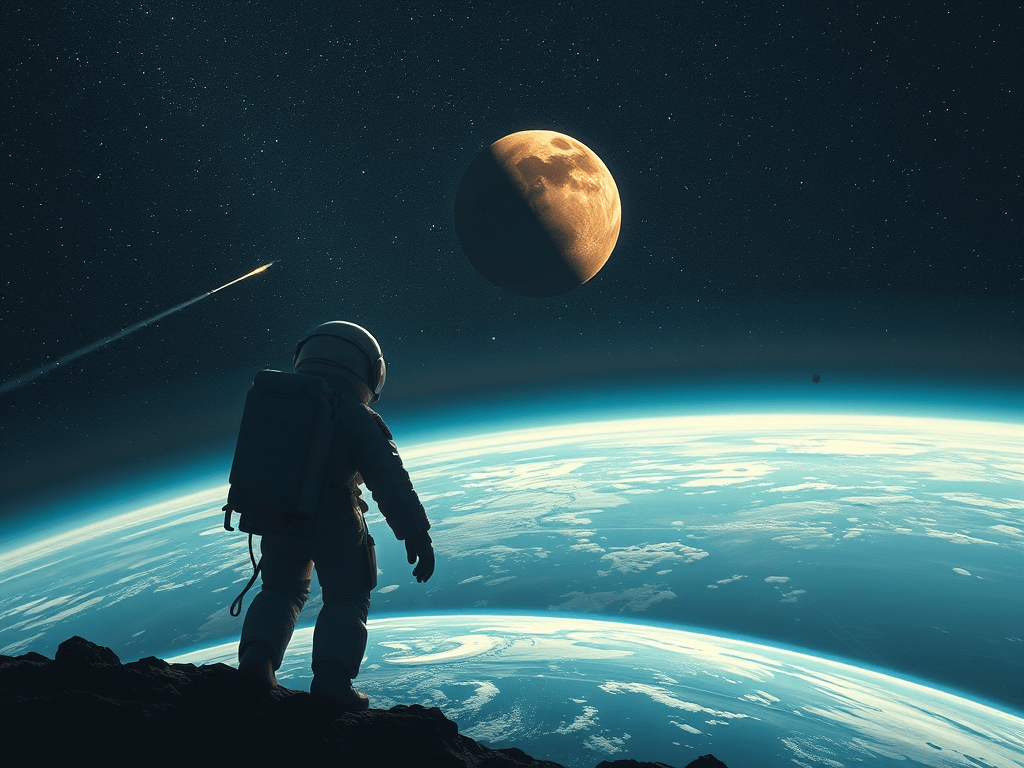
Space exploration has always been a sign of human curiosity and ambition. From the first moon landing to today’s missions to Mars, people continue to dream of traveling beyond Earth. On one hand, the idea of traveling beyond Earth and learning more about the universe is interesting. On the other hand, I can’t ignore the serious risks and severe damage that come with these efforts.
As a child, I remember hearing about astronauts and rockets and feeling amazed at what people can accomplish. Even now, the idea of space is thrilling because it feels mysterious and full of possibilities. People have always looked up at the stars and wondered what is out there, and space missions show how far our imagination can take us.
Sending people into space exposes them to many issues, such as health problems, sudden death, along with the rocket launches that are slowly destroying the Earth. The question many people ask is whether space exploration is really worth it. This idea forces people to think about both the discoveries and the inconveniences that come with space travel.
One thing that causes people to worry about space exploration is the risk to human health. It’s mentioned on LiveScience that stem cells that regulate immune system health become more active in space. The study explains how this can lead to DNA damage, weaken the immune system, and speed up aging. Space also causes changes in physical appearance, such as stretching one’s bones, making astronauts appear taller.
When I think about how astronauts are exposed to these conditions for a long period of time, it really reminds a person of the dangers associated with these missions. These risks indicate that we are not yet ready for space exploration, and we should prioritize keeping these individuals safe over sending them into space solely for the sake of science.
Space exploration doesn’t only affect the human body, but the Earth as well. A main problem includes space debris, as read in Aerospace.org, that there are more than 27,000 large pieces of debris orbiting Earth, along with millions of smaller ones that can’t be seen. This makes me realize that exploration doesn’t only affect astronauts, but the environment. If debris crashes into satellites, we could lose many tools of communication and direction. If pieces fall back to Earth, they could cause a variety of problems. Although the risk of debris falling to Earth is small, it is still possible. Debris, big or small, is a big problem because anything in orbit moves very fast. With the speed, if a satellite or rocket flies into one, it would be completely destroyed.
Rocket launches are known for their immense release of greenhouse gases. A study in ScienceDirect shows that emissions from rockets damage the ozone layer and increase global warming. I think about how hard people are already working to slow down climate change, and it seems like reducing rocket launches can heavily help with this. This shows that space exploration and protecting Earth are interconnected. We can’t treat them as separate issues because one heavily impacts the other.
I can’t disagree that space exploration has benefits. Satellites are a major discovery that now helps us with tracking weather, understanding climate change, and managing natural disasters. These achievements make me understand why people are still so passionate about exploring space.
Still, even with these achievements, the heavy risks that come with exploring space aren’t worth it. Before space travel is tackled, I believe we as people should prioritize health and safety first. Without these necessary changes, the negative effects may outshine the positive ones.
In the end, I believe space exploration is not worth the risk. It may sound exciting and inspiring, but underneath the excitement are serious dangers. Health risks, space debris, pollution, and wasted resources all point to the answer that space exploration is not worth it. For me, space exploration is not worth the danger to humans and the damage to Earth.



 Student Spectrums
Leave a comment