
Madiha Nawed is interested in reading books, writing articles, and spreading awareness. She is learning about the power of raising voices as well as inspiring others to do so in order to express their own opinions.
The talk about global plastic pollution is undoubtedly getting boring. But despite the fact that the issue is among the most critical ones threatening our planet, we don’t want to read about it and would rather scroll onwards to more interesting topics, like the kid who hit the jackpot and the cat that inherited 2 million. But the 8 million tons of plastic waste dumped in our oceans and landfills, as estimated by the UN Nation, isn’t a joke. Something that takes centuries to decompose should not be dumped into our oceans or landfills and we should definitely not allow this to harm our marine life. Then we wonder why so many marine animals are going extinct. In the way of solutions, countries such as Morocco, Bangladesh, Kenya and many more have completely banned plastic. It is a question mark to see if that really would be a viable solution.
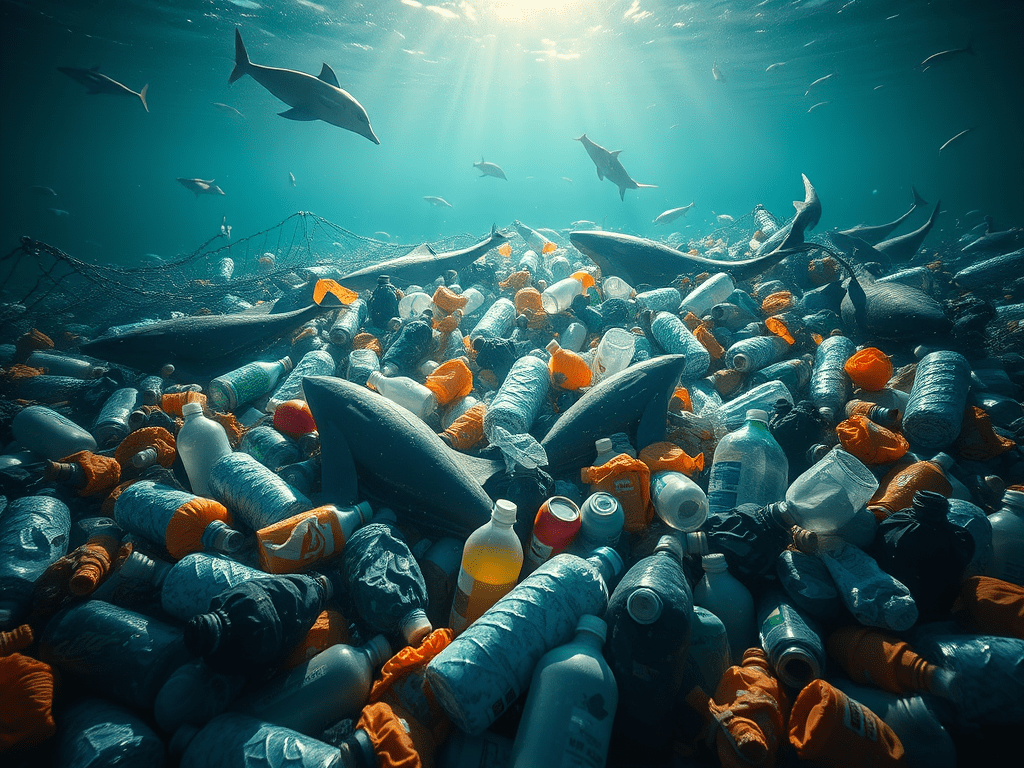
Although thinking about plastic pollution might seem absolutely monotonous at first, it is one of the most crucial issues affecting our ecosystem. Plastic waste is a major issue. Since decomposing this waste takes hundreds of years, people take the easy route and usually dump it in oceans and landfills as if oceans are nature’s giant trash cans. Spoiler alert: they’re not. According to the United Nations, approximately 8 million tons of plastic waste enter the oceans each year, harming marine life and disrupting ecosystems.
Marine animals often mistake plastic for food, and eat it. This leads to injury and sometimes even death. Then people write articles as to why exactly that specific fish died and what its fossils look like now. This is one of the main reasons why marine species are dying and even going extinct, due to habitat degradation. Further, plastics are consumed by humans indirectly when they enter the food chain through fish and other marine life. A ban on these plastics can immensely reduce the negative impacts and save us from future boring headlines about plastic pollution.
Another environmental benefit is the reduction in resource consumption. The production of plastics requires resources, many of which come from fossil fuels such as petroleum and natural gas. According to ScienceDirect “The substantial reliance on fossil fuels to produce plastics has been associated with the release of greenhouse gases (GHG), thereby exacerbating challenges including disruptions in food supply, augmentation of wildfire occurrences, and escalation of extreme weather events, among other consequences.” By reducing demand for plastics, a ban could lower the overall plastic production which means fewer environmental headaches, and who wouldn’t want that? Let’s together give Mother Nature a break.
Let’s take inspiration from Aldous Huxley “Reality cannot be ignored except at a price; and the longer the ignorance is persisted in, the higher and more terrible becomes the price that must be paid.” To completely replace plastics with environmentally friendly options, it is crucial to see if the alternatives are not only biodegradable but also produced using sustainable practices that minimize the environmental impact.
To spread public awareness, governments should implement public education campaigns. However the success of this ban depends on how well it is implemented and the collective effort of people to adopt sustainable behaviors. Without this enlightening moment, a plastic ban might just be a fancy headline with limited results.



 Student Spectrums
Leave a reply to Husna_M Cancel reply