
Zaara Khan often ties her personal experiences to the articles or stories she has read. As part of many school projects, she uses her creativity to voice her opinions on important topics. She hopes that she can shed light on topics that others may disregard.
In June 2023, a study by Ki-Weon Seo from Advancing Earth and Space Sciences revealed that Earth’s rotation has tilted towards 64.14 degrees East due to “groundwater depletion and resulting sea level rise.” Climate change has been a significant issue in recent years, but this new tilt could result in the loss of countless species, causing grief to those who grew attached to them, such as my young nieces, who have grown quite fond of animals.
The United Nations calls climate change the long-term shift in temperatures and weather patterns. Climate change is mainly due to the sun’s heat being trapped in the earth’s atmosphere, which is intertwined with greenhouses. Greenhouse gases, such as carbon dioxide, methane, nitrous oxide, and synthetic gases emitted from household, commercial, and industrial means, trap some of the Earth’s outgoing energy, retaining heat in the atmosphere.
The Earth’s gradual tilt is caused by groundwater storage changes, as stated by Ki-Weon Seo. In the research letter, the scientists also discovered that climate model estimates show significant groundwater depletion during the 20th century. This was due to companies draining water sources and transporting and distributing it elsewhere.
Alongside that, the extra heat trapped in the Earth’s atmosphere is causing the glaciers in Antarctica to melt, contributing to a large surplus of excess water. Countries have built artificial dams and storage or migrated water elsewhere to counter this. The shifts in water redistribute Earth’s mass, similar to how a balance scale tips when more mass is on one side.
Sadly, climate change has gotten too far out of control to stop, but it can be slowed down. Jeff Turrentine from the Natural Resources Defense Council, says that replacing coal, oil, and gas with renewable and efficient energy sources could potentially stop climate change, but only if society acts fast.
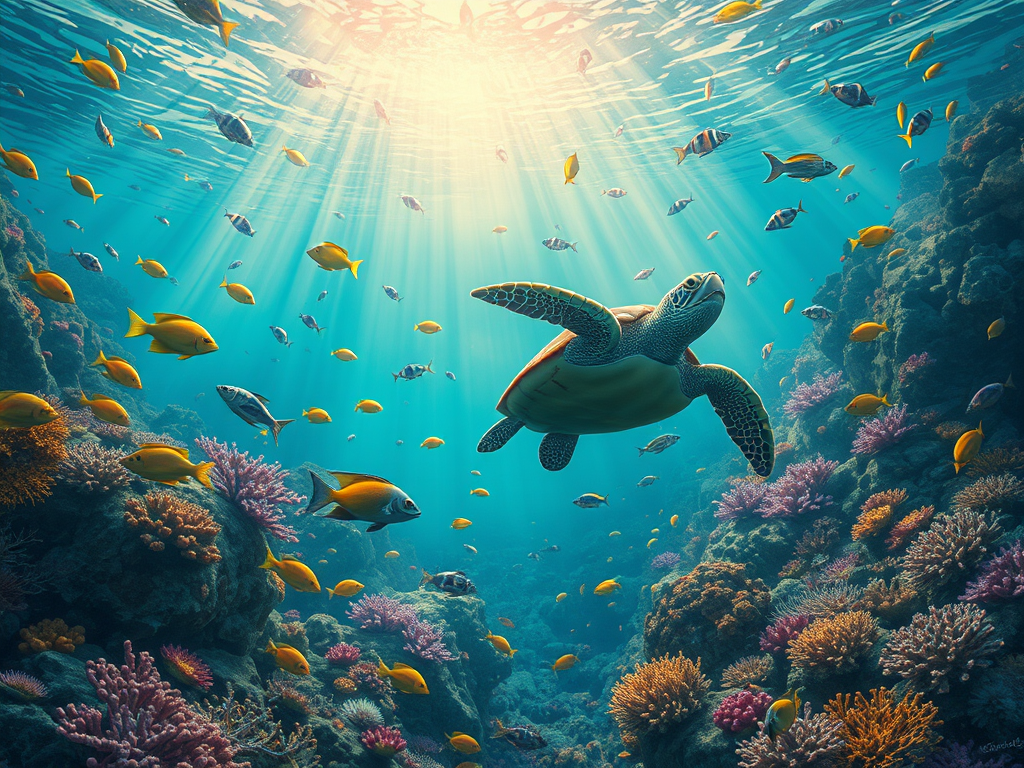
If climate change were to stop, I could show my baby nieces their favorite oceanic animals, their favorite animals since watching Moana, up close and in an aquarium, rather than having to show them a picture of a fish and saying “The species ended in 2024 because humans could not act fast enough to save them.” When humans as a society, start to work together, we could counter climate change and let our beloved animals live on for centuries to come.




 Student Spectrums
Leave a comment